vikram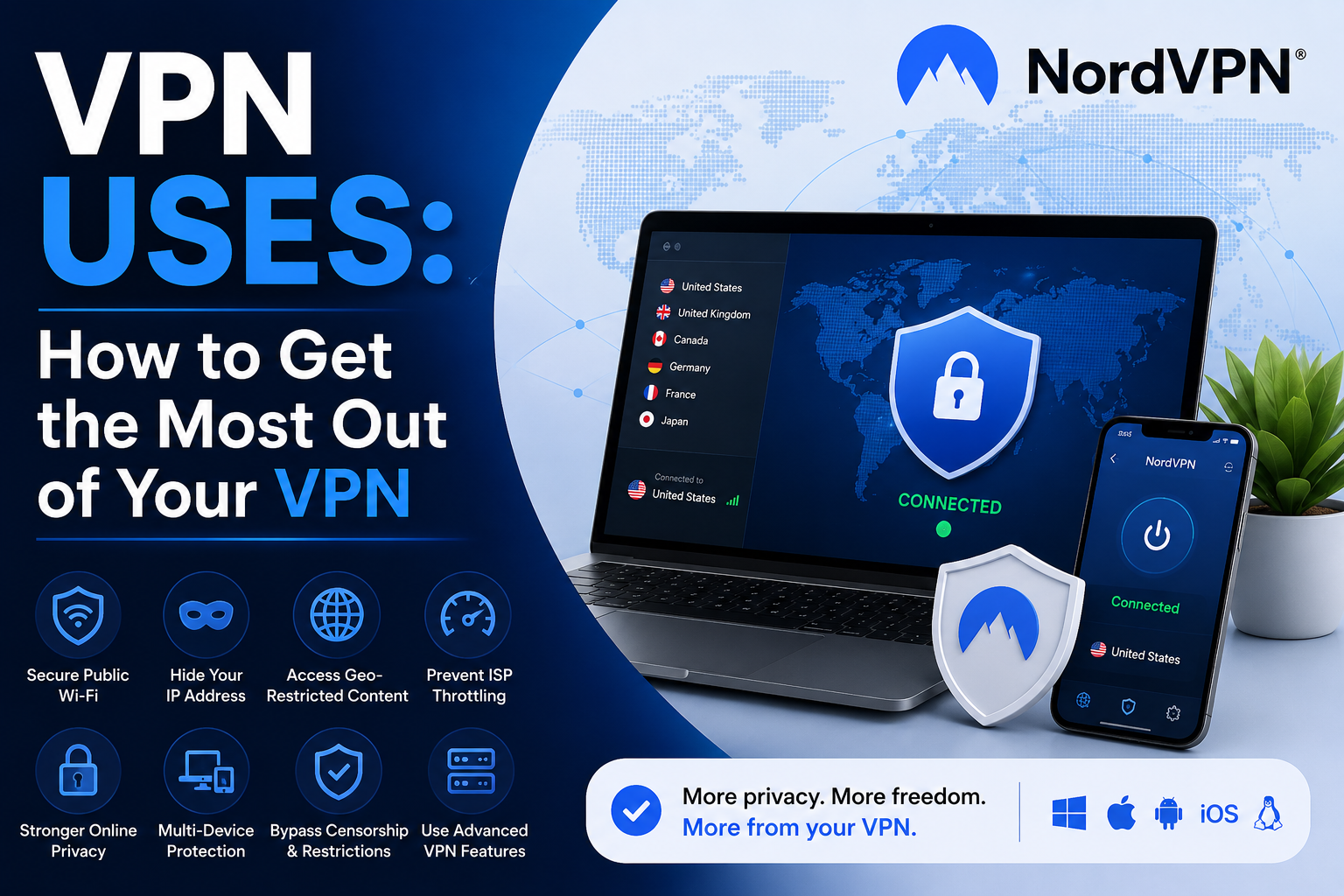
A VPN is often described as a tool for hiding your IP address, but that’s only one of its uses.
A VPN can help secure public Wi-Fi connections, provide an encrypted connection, change your apparent online location, and in some situations help with network restrictions or ISP throttling.
What Is a VPN?
VPN stands for Virtual Private Network.
A VPN routes your internet traffic through a VPN server and masks your original IP address.
Your connection travels through an encrypted tunnel between your device and the VPN server, making it more difficult for outsiders to intercept your traffic.
1. Secure Public Wi-Fi
Public Wi-Fi can be convenient, but unsecured networks can create security risks.
Airports, hotels, cafés, restaurants, and other public locations often provide Wi-Fi that many different people can access.
A VPN encrypts your connection between your device and the VPN server, making it harder for attackers on an unsecured network to intercept your traffic.
This makes a VPN particularly useful for travelers and people who frequently work outside their homes.
2. Hide Your IP Address
Your IP address can reveal information about your network and approximate location.
When you connect to a VPN server, websites see the VPN server’s IP address rather than your original IP address.
This provides an additional layer of online privacy.
3. Browse More Privately
A VPN encrypts traffic between your device and the VPN server.
This can make it more difficult for third parties to monitor the connection while the VPN is active.
However, VPNs do not provide complete anonymity. Cookies, browser fingerprinting and malware are examples of other technologies that can still be used for tracking.
4. Access Different Locations
VPN providers operate servers in different countries.
By connecting to a server in another location, your connection can appear to originate from that VPN server’s location.
This can be useful when you need access to a service or website that is available only in certain locations.
However, websites and streaming services can have their own rules regarding VPN usage, so users should check the applicable terms.
5. Reduce Some ISP Throttling
Internet Service Providers can sometimes reduce connection speeds for certain types of traffic or high-bandwidth activities.
The supplied NordVPN content explains that a VPN can prevent an ISP from seeing the specific online activity in the same way because the traffic is routed through the encrypted VPN connection.
However, a VPN cannot magically make a slow internet connection fast. Your VPN speed still depends on the server, protocol, distance, network conditions, and original connection.
6. Use Different VPN Protocols
VPN services can provide different protocols for different needs.
Common examples include:
- WireGuard
- OpenVPN
- IKEv2/IPsec
These protocols can differ in speed, stability, and security characteristics.
7. Use Specialty Servers
Some VPN services offer specialty servers for specific situations.
For example, NordVPN offers:
- Double VPN
- Onion Over VPN
- Obfuscated servers
- P2P
- Dedicated IP
Each category has a different purpose, so you don’t necessarily need a specialty server for normal browsing.
8. Protect Your Connection While Traveling
Travelers frequently connect to unfamiliar Wi-Fi networks.
Using a VPN while traveling can provide an additional layer of protection when connecting to public networks.
NordVPN also offers NordWhisper, which the supplied information describes as a protocol designed to help users connect on networks where VPN traffic may be filtered or restricted.
9. Additional Online Protection
Some VPN services now offer features beyond VPN encryption.
NordVPN’s supplied material describes its next-generation antivirus as an additional layer of online protection capable of blocking malicious websites, phishing attempts, ads and trackers, as well as identifying and removing malware-infected files.
How to Get the Most From a VPN
To get better results from your VPN:
- Choose a nearby server when speed is your priority.
- Test different servers if one connection is slow.
- Use specialty servers only when you need their specific function.
- Keep your VPN application updated.
- Test for DNS, IP and WebRTC leaks periodically.
- Use a reputable VPN provider with a clear privacy policy.
NordVPN as an Option
NordVPN currently offers 9,500+ servers in around 150 countries according to the supplied content, along with major VPN protocols and specialty server options.
The supplied information also cites a West Coast Labs test from October 2025 in which NordVPN averaged 817 Mbps.
Get NordVPN
If you want to try NordVPN, use your dedicated affiliate link:
https://go.nordvpn.net/aff_c?offer_id=266&aff_id=154507&url_id=710