vikram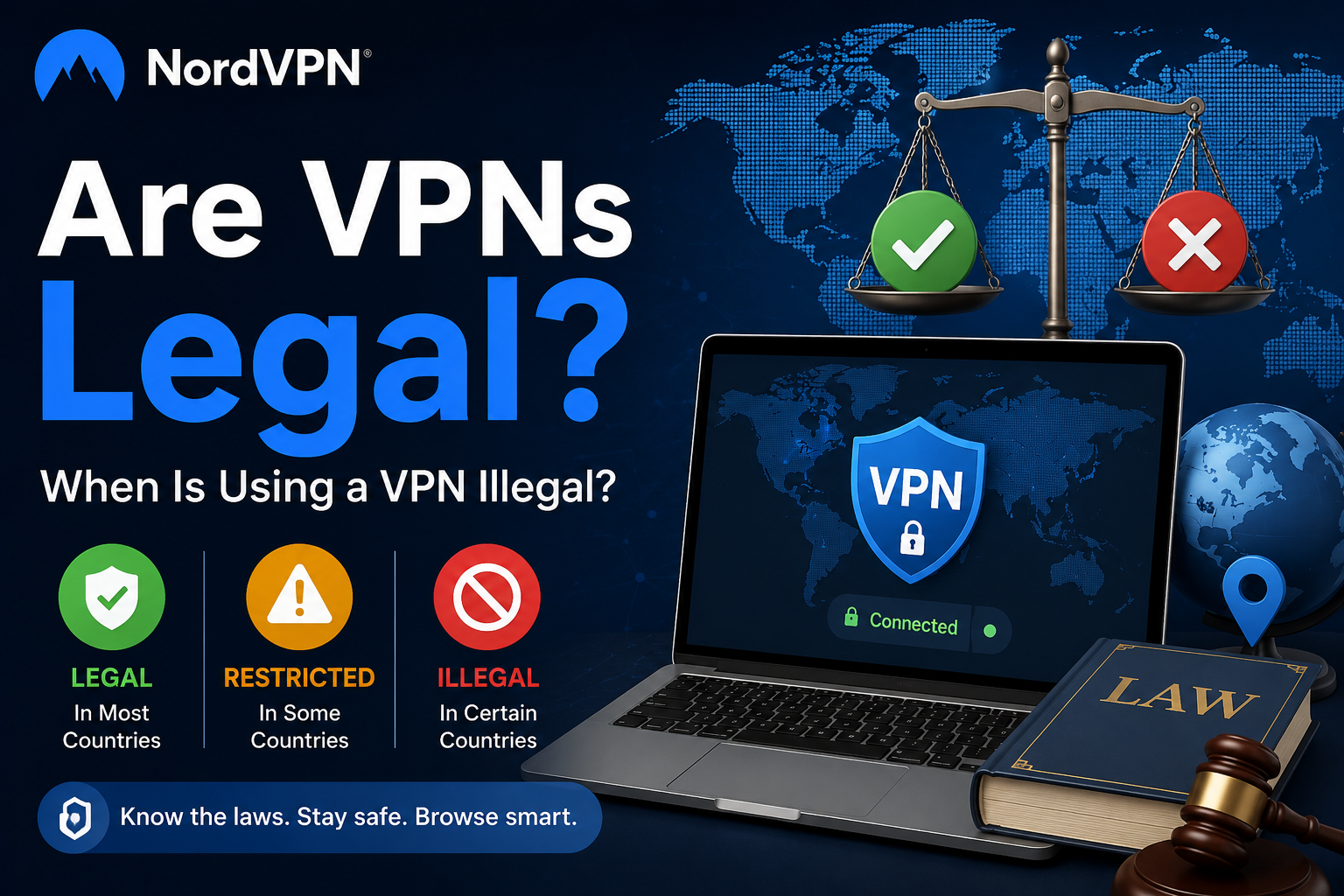
VPNs are legal in many parts of the world, but the rules aren’t identical everywhere.
Some countries restrict VPN services, while others allow VPN use but prohibit certain activities carried out through a VPN.
If you’re traveling or living abroad, it’s important to understand the local rules before using a VPN.
Are VPNs Legal?
In many countries, using a VPN is legal.
However, some countries have restrictions on VPN services or VPN connections. The supplied NordVPN content identifies countries where VPN use is illegal, restricted, or subject to additional rules.
The legal status can also change, so travelers should check current local regulations rather than relying on an old list.
Where Are VPNs Restricted?
The NordVPN content provided for this article identifies several countries with restrictions.
Turkey
The supplied material describes VPN use as partly restricted, with some VPN providers unavailable.
Russia
Many VPN services have been blocked because they do not comply with state requirements.
China
Many VPN services and connections are blocked as part of China’s broader internet censorship system.
North Korea
The country has extremely restricted access to the global internet, and the supplied material warns that VPN use can result in serious consequences.
Belarus
The supplied brief states that VPNs and the Tor network have been illegal since 2015.
UAE
The supplied content says VPN use itself is not illegal, but using a VPN to commit an illegal activity can result in additional penalties.
Egypt
The material states that VPN use is not itself illegal, but using a VPN to commit a crime is illegal.
Venezuela
VPNs are not described as illegal, although some VPN websites are blocked.
Uganda
VPNs are not described as illegal, but restrictions have been introduced in connection with social media access.
Iraq
The supplied material describes VPN use as illegal and warns of punishment for users who are caught.
Why Are VPNs Restricted?
VPNs can make it possible to access websites and online services that are blocked by local networks.
In countries with heavy censorship, governments may therefore restrict VPN services or block VPN connections.
However, VPN restrictions and laws vary significantly between countries.
Is Illegal Activity Legal If You Use a VPN?
No.
A VPN does not make an illegal activity legal.
For example, the supplied NordVPN brief specifically notes that using a VPN for illegal activities such as downloading copyrighted content remains illegal in countries where that activity is prohibited.
The important distinction is between using a VPN and what you do while connected to a VPN.
How to Choose a Safe VPN
When choosing a VPN, look for:
- Strong encryption
- Reliable VPN protocols
- No-logs policy
- Independent audits
- Kill switch
- DNS/IP leak protection
- Customer support
- Reliable server network
A kill switch can help prevent an IP address from being exposed if the VPN connection suddenly drops.
NordVPN and Privacy
The supplied NordVPN information states that NordVPN is a six-times audited no-logs service.
It also supports OpenVPN, IKEv2/IPsec and NordLynx and offers specialty servers such as Double VPN, Onion Over VPN and obfuscated servers.
Important: Check Local Laws
VPN laws can change.
If you’re traveling to another country, check the latest local rules before using a VPN, especially if the country has strict internet restrictions.
This article provides general information and shouldn’t be treated as legal advice.
Try NordVPN
https://go.nordvpn.net/aff_c?offer_id=266&aff_id=154507&url_id=710